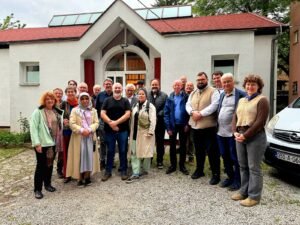
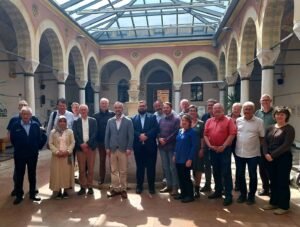
Educational Journey Through Bosnia and Herzegovina on the Theme of Interreligious Encounter and Dialogue (Gallery)
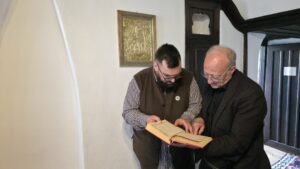
The Muslim Religious Leader in Luxembourg, Hafiz Hilmija Redžić, participated in an educational journey across Bosnia and Herzegovina organized by the Evangelische Kirche im Rheinland, with the participation and cooperation of representatives of the Muslim community in Germany. The program was dedicated to themes of interreligious encounter, culture of remembrance, interfaith dialogue, and understanding contemporary Bosnian society through historical, religious, and social perspectives.
The coordinator of the trip was Dr. Linda Hyökki, researcher and expert on anti-Muslim racism, public policy, and interreligious dialogue, engaged with the European Coalition of Cities against Racism (ECCAR). During this multi-day program, participants had the opportunity to discover the cultural and religious richness of Bosnia and Herzegovina, as well as the challenges the country has faced throughout its recent history.
The program began in Sarajevo with visits to the old town, Baščaršija, Kovači, and the Martyrs’ Cemetery, where participants learned about the history of Sarajevo and symbolic places connected to the contemporary history of Bosnia and Herzegovina, including the grave of the first President of the Republic of Bosnia and Herzegovina, Alija Izetbegović. These first encounters presented Sarajevo as a city shaped for centuries by the coexistence of Muslims, Orthodox Christians, Catholics, and Jews.
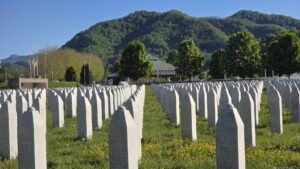
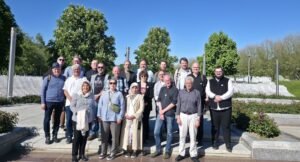
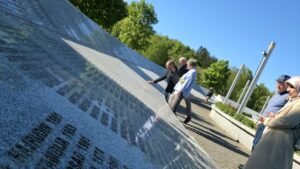
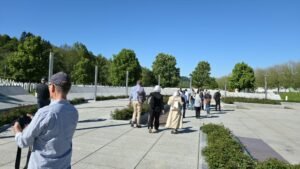
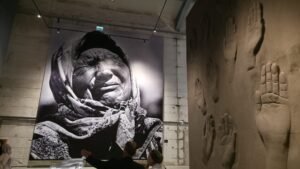
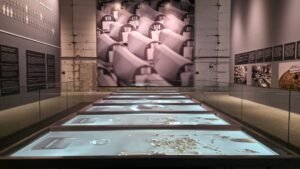
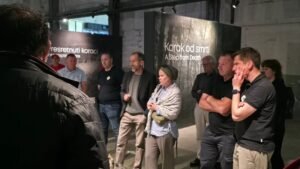
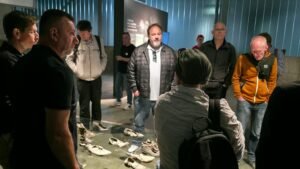
A particularly important part of the program was dedicated to Srebrenica and the culture of remembrance. Participants visited the Memorial Center and the cemetery in Potočari, where they listened to testimonies and explanations regarding the genocide committed against Bosniaks in July 1995. The meeting with Hasan Hasanović, author, genocide researcher, and survivor of Srebrenica, left a profound impression. Through his personal testimony, he spoke about the tragedy endured, the loss of members of his family, and the importance of preserving truth and memory.
The stay in Srebrenica also provided an opportunity to discuss the lives of those who returned to live in the region, the challenges of daily life, and the importance of preserving the Muslim presence in this part of Bosnia and Herzegovina. This visit deeply moved the participants and opened important reflections on human dignity, justice, reconciliation, and the responsibility of contemporary societies toward memory and truth.
The program also included a visit to Herzegovina. Participants visited the Blagaj Tekke, located at the source of the Buna River, where the spiritual and cultural importance of this site within the Islamic tradition of Bosnia and Herzegovina was presented.
The journey continued in Mostar with a visit to the old town and a particular focus on the Old Bridge (Stari Most), considered one of the most important symbols of Bosnia and Herzegovina. Through discussions about its history, destruction, and reconstruction, the bridge was presented as a symbol connecting peoples, cultures, and religions, but also as a symbol of dignity, resilience, and rebirth after the devastation of war. Participants also discovered the Islamic heritage of Mostar and Herzegovina through visits to historic mosques and sites in the old town. Special attention was given to the visit of the multiethnic and integrative kindergarten “Sunčani most,” where a model of shared education for children from different national and religious backgrounds in a post-war society was presented.
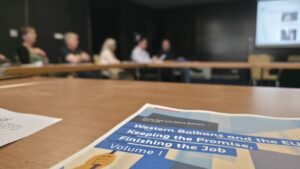
In Sarajevo, several meetings were organized with representatives from academic, social, and religious circles. Discussions with representatives of the Friedrich-Ebert-Stiftung focused on contemporary social challenges, interreligious dialogue, and the place of religion in European society.
An important part of the program was dedicated to the visit of the Faculty of Islamic Studies at the University of Sarajevo. Participants exchanged views with Professor Asim Zubčević on the history of Islamic education in Bosnia and Herzegovina, the role of imams in European society, challenges related to preserving religious identity, and contemporary approaches to the education of Muslim religious leaders. The Faculty of Islamic Studies was presented as one of the most important Islamic academic institutions in the region.
The program also included meetings with representatives of other religious communities and institutions. During the visit to the Catholic higher education institution, participants discussed the work of the Interreligious Council of Bosnia and Herzegovina and experiences of interreligious cooperation in a country marked by a long history of encounters between religions and cultures. The discussions were led by Catholic priest and professor Oliver Jurišić.
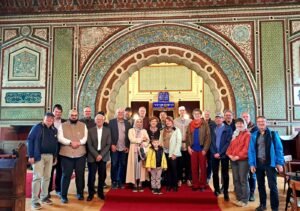
An important contribution to the interreligious dimension of the program was provided through the visit to the Ashkenazi Synagogue in Sarajevo, where participants were welcomed by Igor Bencion Kozemjakin, hazzan of the Jewish community of Sarajevo, and Rahela Džidić Levi, president of the Jewish community of Sarajevo. Discussions focused on the history of Jews in Bosnia and Herzegovina, their centuries-long presence in Sarajevo, and the challenges related to preserving their religious and cultural identity in contemporary society. Sarajevo was presented as a symbol of coexistence and mutual respect among different religious communities.
The program also included a visit to the Evangelical community of Sarajevo, hosted by Pastor Saša Nikolinović, as well as a meeting at the “Nahla” center dedicated to the role of Muslim women in post-war Bosnia and Herzegovina, their place in society, education, and social engagement.
Throughout the entire program, particular emphasis was placed on open dialogue, mutual respect, and understanding among people of different religious and cultural identities. Through numerous meetings, discussions, and institutional visits, participants gained a deeper understanding of the complexity of Bosnian society and the richness of its centuries-old religious and cultural heritage.
At the end of the program, thanks were expressed to the organizers, especially the Evangelische Kirche im Rheinland and the coordinator Dr. Linda Hyökki, as well as to all hosts and participants who contributed to making this educational journey an experience marked by respect, openness, and sincere dialogue. It was emphasized that such encounters represent an important contribution to strengthening interreligious understanding and cooperation among people of different traditions and convictions, while also reaffirming the universal values of peace, human dignity, and the common good.